How Students Can Learn Python and Machine Learning for a Career in AI
Artificial intelligence now shapes healthcare, finance, retail, and almost every other industry, and this shift creates a clear starting point for students who want in: Python and Machine Learning for Students form the foundation that every AI career needs. Recruiters no longer just scan for a computer science degree; they look for candidates who can code, analyze data, and build working models. Students who master these two skills early gain a real head start over their peers.
Why Python Comes First
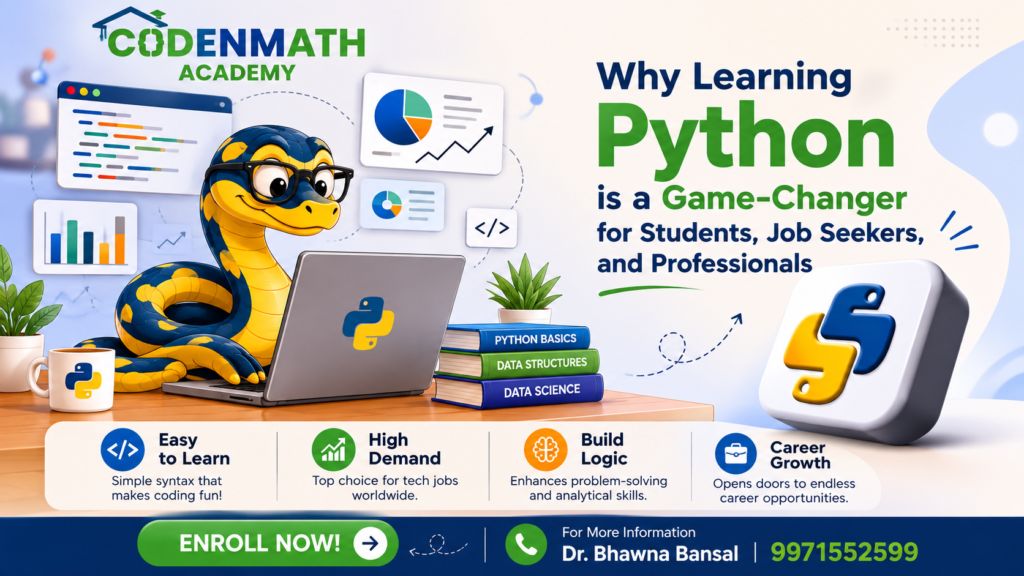
Python leads every AI roadmap for a simple reason — it reads almost like plain English. Beginners grasp variables, loops, and functions quickly, so they spend their energy on logic and problem-solving instead of fighting confusing syntax. This low entry barrier matters most for students juggling coursework, projects, and exams; they need a language that rewards early effort instead of punishing it.
Python also carries an enormous ecosystem behind it. Libraries such as NumPy and Pandas handle data manipulation, Matplotlib and Seaborn create visualizations, and frameworks like TensorFlow, Keras, and PyTorch power modern AI models. A student who learns Python doesn’t just learn one skill — they unlock access to the entire toolkit that data scientists and machine learning engineers use daily.
Building the Right Foundation Step by Step
Students often rush toward machine learning before they secure the basics, and that shortcut usually backfires. A more reliable path looks like this:
Learn core Python
Variables, data types, loops, functions, and object-oriented basics. Small projects like a calculator or a number-guessing game build confidence fast.
Practice data handling
Pandas and NumPy teach students to clean, filter, and reshape real datasets, a skill every AI role demands.
Study statistics and math fundamentals
Probability, linear algebra, and basic calculus explain why machine learning algorithms behave the way they do, not just how to call a function.
Explore machine learning libraries
Scikit-learn introduces classification, regression, and clustering with approachable syntax before students move to deep learning frameworks.
Build and share projects
A portfolio of real, working projects on GitHub speaks louder to recruiters than a certificate ever will.
This sequence keeps momentum steady. Each stage produces a visible result, which keeps motivation high — a factor that matters as much as raw skill when students study largely on their own.
Why Machine Learning Follows Naturally
Once Python and data handling feel comfortable, machine learning stops looking intimidating. Concepts like training data, model accuracy, and overfitting connect directly to the Pandas and NumPy work students already practiced. Scikit-learn lets them train a working model in a few lines of code, which builds intuition before they tackle the heavier math behind neural networks.
Deep learning frameworks such as TensorFlow and PyTorch come next, opening doors to computer vision, natural language processing, and generative AI — the fields driving today’s AI job market. Employers consistently rank these skills among the most valuable in 2025 and beyond, and students who combine them early position themselves for internships, research opportunities, and entry-level AI roles well before graduation.
Practical Tips for Student Learners
- Code daily, even briefly. Twenty focused minutes beats a single long session once a week.
- Choose projects tied to personal interests — a sports predictor, a movie recommender, or a study-habit tracker keeps learning enjoyable.
- Join online communities and coding forums. Peer feedback speeds up debugging and exposes students to techniques they wouldn’t find alone.
- Document every project on GitHub. A visible portfolio turns coursework into proof of ability.
- Balance theory with hands-on practice. Reading about algorithms helps, but running them on real data cements the understanding.
Students who follow this rhythm — consistent practice, project-based learning, and steady progression from Python to machine learning — build both the technical skill and the confidence that AI careers demand.
Conclusion
The AI job market rewards students who move beyond theory and demonstrate real capability. Python and Machine Learning for Students isn’t just a course title; it’s a career strategy. Start with clean, simple Python code, add data-handling skills, layer in statistics, and step into machine learning once the fundamentals feel solid. Students who commit to this path today put themselves in a strong position for tomorrow’s AI-driven job market.
Frequently Asked Questions (FAQs)
Q1. Do students need a strong math background before starting Python and machine learning?
Not immediately. Students can start coding in Python with minimal math and pick up statistics, linear algebra, and probability alongside their coding practice as they approach machine learning.
Q2. How long does it take a student to learn Python and machine learning?
Most students build solid Python skills in two to three months of regular practice, and a working grasp of machine learning fundamentals typically takes another three to six months, depending on the time invested each week.
Q3. Which Python libraries should students prioritize for AI?
NumPy and Pandas for data handling, Matplotlib or Seaborn for visualization, Scikit-learn for classical machine learning, and TensorFlow or PyTorch for deep learning form the essential toolkit.
Q4. Can students learn machine learning without prior coding experience?
Yes. Python’s beginner-friendly syntax lets students with zero coding background start from scratch, though a steady, project-based approach works far better than jumping straight into complex ML topics.
Q5. What kind of projects help students stand out to recruiters?
Projects that solve a real, relatable problem — a data visualization dashboard, a prediction model, or a chatbot — demonstrate applied skill better than certificates alone and give recruiters something concrete to evaluate.